





A well-made boat canvas does more than keep rain off your seats. It protects upholstery, electronics, flooring, controls, and storage areas from sunlight, moisture, dirt, bird droppings, and seasonal weather.
For boat owners in Gibraltar, Michigan, the right cover can be especially valuable during changing spring conditions, summer sun, windy marina days, and winter storage. However, not every boat canvas cover provides the same level of protection. Fabric quality, fit, stitching, ventilation, hardware, and maintenance all affect how well a cover performs.
This guide explains what boat canvas is, the types available, how to select the right marine fabric, when repairs are worthwhile, and how to make a cover last longer.
What Is Boat Canvas?
Boat canvas is a general term for the marine-grade fabric products used to cover, enclose, or shade parts of a boat. Despite the name, modern marine canvas is not necessarily made from traditional cotton canvas. Most products use synthetic acrylic, polyester, vinyl, or coated fabric designed for outdoor marine exposure.
A complete canvas system may include:
- A canvas boat top or bimini top
- A boat cockpit cover
- A mooring or storage cover
- A windshield or cockpit enclosure
- Clear vinyl window panels
- Snap-on side curtains
- Seat and console covers
- A T-top, dodger, or pontoon enclosure
Boat upholstery is related but serves a different purpose. Upholstery covers padded seats and interior surfaces, while marine canvas generally creates an exterior protective barrier or shade system.
Common Types of Boat Canvas
The best cover depends on where the boat is kept and how it is used.
Bimini Top
A bimini top is an open-sided boat canopy supported by a metal frame. It provides shade while allowing airflow through the cockpit. A bimini is useful during summer boating but normally does not provide complete rain or storage protection.
Cockpit Cover
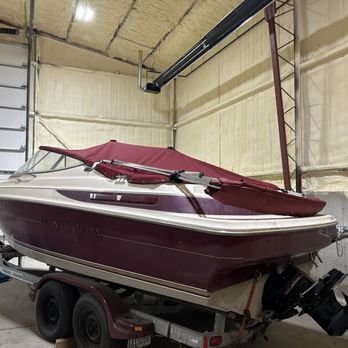
A boat cockpit cover protects the seating, controls, deck, and other exposed cockpit components. It commonly attaches with snaps around the windshield and hull.
A properly fitted cockpit cover should slope enough to move water away from the center. Support poles may be needed to prevent water from pooling.
Mooring Cover
A boat mooring cover is designed for a boat kept at a dock, lift, or marina. It should fit closely, handle wind, drain water efficiently, and allow enough ventilation to reduce trapped moisture.
Storage Cover
A boat storage cover is intended for longer periods when the boat is not being used. Storage covers may protect more of the hull than cockpit or mooring covers.
A waterproof boat cover still needs ventilation. A completely sealed cover can trap humid air, which may encourage odors, stains, and mildew on dirt or organic residue.
Full Boat Enclosure
A boat enclosure combines fabric panels with clear vinyl windows to create a more protected cockpit. Enclosures can extend the boating season and provide shelter from wind, spray, and rain.
A custom boat cockpit enclosure with clear windows must be carefully patterned so the windows remain smooth and the panels connect correctly around the windshield, bimini frame, doors, and rails.
Specialty Covers
Custom marine covers are also available for specific boat styles and components, including:
- Pontoon boat canvas
- Sailboat canvas and dodger covers
- Yacht canvas
- Speedboat covers
- T-top covers
- Center-console covers
- Individual boat seat covers
- Helm and instrument covers
What Is the Best Fabric for Boat Covers?
There is no single best fabric for every application. The right material depends on whether the cover will be used for shade, mooring, trailering, enclosure panels, or long-term storage.
Solution-Dyed Acrylic
Solution-dyed acrylic is commonly used for bimini tops, cockpit covers, and custom enclosures. Sunbrella marine fabric is one well-known example.
Quality acrylic marine fabric is valued for its color stability, breathability, water repellency, and resistance to UV exposure. It is not the same as a rigid waterproof sheet. Its woven construction helps release some trapped moisture while still providing weather protection.
Coated Polyester
Coated polyester may be used for storage covers and applications where water resistance, strength, and manageable weight are priorities. Quality varies considerably, so the fabric’s marine rating, UV protection, coating, and warranty should be reviewed.
Vinyl
Vinyl provides strong water resistance and is easy to wipe clean. It is often used for upholstery, protective panels, and clear boat enclosure windows.
In a boat canvas versus vinyl comparison, vinyl is less breathable and may become stiff in cold conditions. Woven marine canvas is often more suitable for large fitted covers, while vinyl works well for windows and selected waterproof sections.
Features That Matter
Look beyond the fabric’s brand name. A dependable canvas system should include:
- UV-resistant boat fabric
- Mildew-resistant materials
- UV-resistant marine thread
- Reinforced stress points
- Quality canvas stitching
- Marine zippers
- Stainless steel fasteners
- Durable snaps or track systems
- Clear vinyl suitable for marine windows
- Proper ventilation and drainage
Even premium material can fail early when seams, zippers, fasteners, or support systems are poorly designed.
Custom Versus Universal Boat Covers
Universal covers are made to fit a range of boats with similar dimensions. They are widely available and may be suitable for temporary protection, indoor storage, or owners working with a limited budget.
Their main limitation is fit. Extra fabric can flap in the wind, collect water, rub against surfaces, or leave portions of the boat exposed.
Custom boat canvas is patterned directly for a particular boat. It can account for the windshield, rails, antennas, towers, cleats, consoles, seating, and other equipment. A custom snap-on boat cover can also use existing fastening locations or add new marine-grade hardware where appropriate.
Custom fabrication is generally a better choice when:
- The boat remains outdoors for much of the season.
- The original cover is no longer available.
- The boat has nonstandard accessories.
- A full enclosure is needed.
- The owner wants a close, clean fit.
- An older model requires boat canvas replacement.
Universal covers can provide basic protection, but a professionally fitted cover usually manages wind, drainage, access, and appearance more effectively.
How to Choose and Measure Boat Canvas
Start by deciding what the cover needs to accomplish. A shade top, mooring cover, trailer cover, and winter storage cover have different design requirements.
Basic boat cover measurements normally include overall length, beam width, windshield height, cockpit dimensions, and the position of rails or mounted accessories. Measurements should follow the boat’s actual contours rather than relying only on the manufacturer’s listed length.
A marine canvas professional may also consider:
- The desired attachment points
- Drainage direction
- Support pole locations
- Areas exposed to abrasion
- Door and zipper placement
- Window visibility
- Vent locations
- Frame clearance
- Whether the cover must work while the boat is in the water
Small measuring errors can create major fit problems. Full enclosures and fitted replacement canvas are therefore best patterned directly on the boat.
How to Clean Boat Canvas
Routine cleaning prevents dirt from becoming embedded in the fabric.
Begin by brushing away loose debris. Rinse the canvas with clean water, apply a mild soap solution, allow it to soak briefly, and rinse thoroughly. Let the fabric air-dry before folding or storing it.
Sunbrella’s current care instructions follow this general process and caution that all soap residue should be removed. The manufacturer also recommends air drying rather than machine drying.
Avoid aggressive scrubbing, pressure washing at close range, and household chemicals unless the fabric manufacturer specifically approves them. Strong cleaning methods may damage coatings, thread, windows, or nearby upholstery.
How to Remove Mildew
Mildew often grows on dirt, pollen, oils, or other material resting on the fabric rather than feeding on the synthetic fabric itself.
Use the cleaning method approved for your specific marine fabric. Sunbrella provides a diluted bleach-and-mild-soap procedure for stubborn mildew on qualifying fabrics, but it also warns boat owners to protect nearby materials, rinse completely, and avoid releasing bleach into surrounding water.
Never assume that a treatment approved for one fabric is safe for every cover, thread, coating, or window panel.
Cleaning Clear Vinyl Windows
Rinse loose dirt from clear vinyl before wiping it. Use a soft microfiber cloth and a cleaner intended for marine clear vinyl.
Do not use dry paper towels, abrasive brushes, household glass cleaners containing ammonia, or harsh solvents. These can scratch, cloud, or weaken the window material.
Store window panels flat or loosely rolled with clean protective material between them. Sharp folds can create permanent creases.
How to Waterproof Boat Canvas
Many marine fabrics are treated for water repellency during manufacturing. Over time, weather exposure and repeated deep cleaning can reduce that treatment.
Before applying a waterproofing product:
- Confirm that it is compatible with the fabric.
- Clean the canvas thoroughly.
- Allow it to dry completely.
- Apply the product evenly in a ventilated area.
- Follow the manufacturer’s coverage and curing instructions.
Do not use a random household waterproofing spray. An incompatible coating may alter the fabric’s appearance, reduce breathability, attract dirt, or interfere with future repairs.
Leaks do not always mean that the entire cover needs waterproofing. Water may enter through damaged seams, stretched stitching, worn zipper tape, poorly placed snaps, or areas where water pools.
Can Boat Canvas Be Repaired?
Many common problems can be repaired when the surrounding fabric remains strong.
Marine canvas repair may include:
- Restitching loose seams
- Patching small tears
- Replacing damaged snaps
- Repairing canvas around fasteners
- Replacing marine zippers
- Installing new clear vinyl windows
- Reinforcing support pole areas
- Correcting minor fit problems
- Sealing or repairing leaking seams
Repair is less practical when the fabric is brittle, badly faded, extensively stretched, or tearing in several places. Stitching a patch into weak material may simply move the failure to another area.
Consider boat cover replacement when:
- The fabric tears with light pressure.
- Several seams and panels are failing.
- The cover no longer fits the boat.
- Windows are cracked or severely clouded.
- Water continually pools despite proper supports.
- Previous repairs no longer hold.
- Replacement costs are approaching the value of a new system.
A marine canvas shop should inspect the base fabric before recommending extensive repairs.
What Affects Custom Boat Canvas Cost?
The cost of custom boat canvas depends on the scope of the project rather than the keyword used to describe it. A simple cockpit cover requires less labor and material than a full enclosure with several windows and removable panels.
Major pricing factors include:
- Boat length and cockpit size
- Complexity of the boat’s shape
- Selected marine-grade fabric
- Number and quality of clear windows
- Zippers, snaps, tracks, and stainless steel fasteners
- Support poles or frame modifications
- Patterning and fitting time
- Removal of old hardware
- Repair versus complete fabrication
- Installation and final adjustments
A replacement canvas for a pontoon enclosure may cost more when the original pattern is unavailable because the new enclosure must be patterned from the frame and boat.
Request a written estimate that identifies the fabric, thread, window material, hardware, labor, and warranty. Comparing quotes only by the final price can hide meaningful differences in construction.
How to Choose a Marine Canvas Company
Choose a company with direct experience in marine fabrication rather than general sewing or outdoor upholstery alone.
Ask prospective providers:
- Do you pattern covers directly on the boat?
- Which marine fabrics and threads do you use?
- How do you reinforce snaps and stress points?
- Can you repair or replace clear vinyl windows?
- Do you service zippers and existing hardware?
- Is installation included?
- What workmanship warranty is provided?
- Can the cover be adjusted after installation?
Examine previous projects involving boats similar to yours. Straight seams, smooth windows, reinforced corners, balanced tension, and carefully positioned hardware are signs of thoughtful fabrication.
A reputable marine upholstery shop should also explain whether repair, partial replacement, or complete custom canvas fabrication offers the best long-term value.
Frequently Asked Questions
How long does boat canvas last?
Service life depends on fabric quality, fit, UV exposure, cleaning, seasonal storage, stitching, and weather. A well-maintained cover generally lasts longer than one that continually flaps, holds standing water, or remains stored while damp.
Why does my boat canvas leak?
Common causes include dirty or worn fabric, weakened water-repellent treatment, leaking seams, damaged stitching, poor drainage, or standing water. Identify the source before treating the entire cover.
How do I tighten a loose boat cover?
Check that support poles are correctly positioned and all snaps, straps, and fasteners are engaged. Do not force a shrunken cover into place, because excessive tension can damage snaps and seams. A canvas shop may be able to adjust the fit or replace specific sections.
How can I prevent boat canvas from shrinking?
Avoid machine drying and high heat. Allow the fabric to air-dry and reinstall it before it becomes completely rigid when the manufacturer recommends doing so. Store it clean, dry, and loosely folded or rolled.
How should boat canvas be stored?
Clean and dry every panel completely. Remove loose dirt from zippers and snaps, protect clear windows, and store the canvas in a dry area away from pests, chemicals, sharp objects, and extreme heat.