





Quick Answer: Shrink wrap gives the tightest seal against snow and wind for boats stored outdoors, but you pay for it every year and it ends up as plastic waste. A reusable winter cover costs more upfront, pays for itself over several seasons, and breathes better. Outdoor storage near Lake Erie favors shrink wrap or a framed cover; indoor storage favors fabric.
Every fall, Michigan boat owners face the same question at the marina office: wrap it again, or finally invest in a cover that comes back out next year? With roughly 800,000 registered boats in the state, it is one of the most common storage decisions in the Great Lakes region, and the right answer depends less on preference than on where your boat will sit for five months.
This guide breaks down how each option works, what each really costs over time, and which storage situations suit each one, so you can make the call before the first heavy snow hits Downriver.
What Is the Difference Between Shrink Wrap and a Boat Cover?
Shrink wrap is a polyethylene plastic film draped over a support structure on the boat and heated until it tightens into a rigid, drum like shell. It is cut away and discarded in spring.
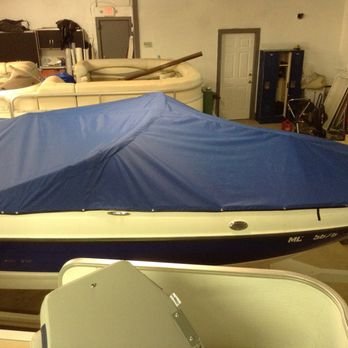
A reusable boat cover is a fitted fabric cover, usually made from solution dyed acrylic or marine polyester, that snaps, ties or straps onto the boat. It is removed, cleaned, folded and reused for multiple seasons.
The core trade off is simple. Shrink wrap wins on seal and rigidity. Fabric wins on reusability and breathability.
How Does Shrink Wrap Protect a Boat in Winter?
Shrink wrap creates a tight, sloped shell that sheds snow and resists wind, which is why it is the default at many outdoor storage yards along the Detroit River and Lake Erie shoreline.
When done well, the installer builds a frame or strapping system that forms a peaked roof line, then shrinks the film so snow slides off instead of piling up. Vents are added so moist air can escape. Without those vents, the wrap traps humidity and invites the exact mildew problems boat owners spend spring cleaning up.
Where shrink wrap shines:
- Outdoor storage with full exposure to wind and snow
- Boats with odd shapes, towers or hardware that a standard cover fits poorly
- Owners who want the boat sealed with no straps to check all winter
Where it falls short:
- It is a recurring cost every single fall
- It is single use plastic that must be removed and disposed of
- Poor venting can lock in condensation
- Professional installers use open flame heat tools close to the boat, so it is not a casual DIY job
How Does a Reusable Winter Boat Cover Work?
A reusable cover protects by shedding water and blocking UV and debris, while letting moisture vapor escape through the fabric itself.
The key to winter success is support. A fabric cover pulled flat across the cockpit will sag, collect water, freeze and stretch. In Michigan, a reusable cover needs support poles or a frame that create a pitch, so rain and snow run off the sides.
Where fabric covers shine:
- Indoor or covered storage such as a pole barn or garage
- Owners who want to lower the yearly storage bill
- Boats that need to stay accessible for winter checks
- Owners who would rather not send plastic to a landfill
Where they fall short:
- Higher upfront cost
- Needs a proper support system for outdoor snow loads
- Straps and tie downs should be checked after big wind events
- A loose or poorly fitted cover can flap and wear the gelcoat
Shrink Wrap vs Boat Cover: Side by Side Comparison
| Factor | Shrink Wrap | Reusable Fabric Cover |
|---|---|---|
| Upfront cost | Lower per season | Higher one time cost |
| Long term cost | Repeats every year | Spread over multiple seasons |
| Snow and wind protection | Excellent when framed and peaked | Very good with support poles or frame |
| Breathability | Depends entirely on vents | Breathable fabric allows vapor to escape |
| Mid winter access | Requires a zipper door or cutting | Unsnap or untie a section |
| Waste | Discarded each spring (recyclable in Michigan) | Reused for years |
| Best for | Exposed outdoor yards | Indoor, covered or sheltered storage |
| DIY friendly | Not really, heat tools involve fire risk | Yes, once fitted |
How Much Does Shrink Wrap Cost Compared to a Reusable Cover?
Shrink wrap is usually priced per foot of boat length, and pricing varies by region, boat type and add ons. As one current example, a Minnesota and Wisconsin mobile service charges $17 per foot up to 19 feet, $18 per foot for 20 to 29 feet, and $19 per foot for 30 to 39 feet, and leaving a sailboat mast up typically adds $2 to $3 per foot. Local Michigan quotes may land higher or lower, so always get a written price.
A Simple Way to Compare Long Term Cost
Instead of guessing, run the break even math for your own boat:
- Multiply your boat length by your local shrink wrap rate to get the yearly cost.
- Get a written quote for a fitted reusable winter cover.
- Divide the cover price by the yearly shrink wrap cost.
Example: A 20 foot bowrider at $18 per foot costs about $360 to wrap each winter. If a fitted winter cover is quoted at $1,440, it breaks even in four seasons. Every winter after that is savings, minus occasional cleaning or repairs.
If you plan to keep the boat only a season or two, shrink wrap often makes more financial sense. If you plan to keep it for many years, a reusable cover usually wins.
Which Option Fits Your Storage Situation?
Your storage location matters more than anything else in this decision.
Outdoor Storage Yard or Backyard
Exposed boats near the water in Gibraltar, Grosse Ile, Trenton or Monroe deal with lake effect wind gusts, freeze and thaw cycles and heavy wet snow. Shrink wrap or a heavy duty framed fabric cover are both sound choices. A flat, unsupported cover is not.
Unheated Pole Barn or Covered Rack
Snow load is no longer the main threat. Dust, bird droppings, rodents and condensation are. A breathable fabric cover is usually the better fit here, and shrink wrap is often unnecessary.
Heated Indoor Storage
A lightweight breathable dust cover is typically all you need. Sealing a boat in plastic inside a heated building can trap warm, moist air.
Boats Staying in the Water
Some owners keep boats in slips with bubblers through winter. In that case, shrink wrap with good venting and secure access is common, but check your marina’s rules first.
Common Winter Storage Mistakes to Avoid
- Wrapping or covering a wet boat. Trapped moisture becomes mildew by March. Let the boat dry completely first.
- Skipping vents. Shrink wrap without vents turns into a greenhouse on sunny winter days.
- Leaving canvas enclosures on under the wrap. Remove side curtains and isinglass panels and store them flat or rolled indoors to prevent creasing and cracking.
- Using a flat cover outdoors. Ponding water freezes, stretches the fabric and can tear seams.
- Letting a cover rub the hull. Loose fabric flapping in wind can dull gelcoat over months.
- Cutting shrink wrap carelessly in spring. A sharp knife slip can slice upholstery or scratch fiberglass. Use a safety cutter and work slowly.
- Ignoring the cover until spring. A quick check after big storms catches broken straps or snow buildup early.
Is Shrink Wrap Bad for the Environment?
Shrink wrap does not biodegrade, but Michigan offers one of the most established recycling programs in the Great Lakes region.
Recycle Run is Michigan’s official boat shrink wrap recycling program, promoted by the Michigan Recycling Coalition in partnership with EGLE and Dr. Shrink, a shrink wrap supplier based in Manistee. In 2023 the program collected 87,000 pounds of film, about 43 tons of plastic kept out of Michigan landfills, and the recycled marine film is turned into composite decking.
To be accepted, the wrap has to be clean. All straps, buckles, zippers, doors and vents must be removed before bagging. Locally, Monroe Boat Club has hosted shrink wrap recycling in partnership with the program, so check the current participant list each spring.
Should You Do It Yourself or Hire a Professional?
For shrink wrap, a professional is usually the safer choice. Installers use propane heat tools that produce open flame, and a mistake near fuel vapors, upholstery or canvas can be costly. They also know how to build a proper peak and place vents correctly.
For a reusable cover, the fitting is the part that matters. A well patterned cover with the right support system is easy for most owners to put on and take off themselves every season. A generic cover that does not match your boat’s lines tends to sag, flap and wear out early.
Key Takeaways
- Shrink wrap offers the tightest seal for exposed outdoor storage but is a yearly expense and single use plastic.
- A reusable fabric cover costs more upfront but usually pays for itself within a few seasons if you keep the boat long term.
- Storage location is the deciding factor: outdoor yards favor shrink wrap or framed covers, while barns and indoor storage favor breathable fabric.
- Any outdoor cover needs a pitched support system so snow and water run off instead of pooling.
- Ventilation prevents condensation and mildew under both options.
- Michigan’s Recycle Run program lets boat owners recycle clean shrink wrap into composite decking.
Frequently Asked Questions
Is shrink wrap better than a boat cover for winter?
For boats stored outdoors with full exposure to snow and wind, shrink wrap usually gives a tighter, more rigid seal. For indoor or sheltered storage, a breathable reusable cover is often the better choice because it reduces condensation risk and avoids paying for new plastic every fall.
How long does a reusable winter boat cover last?
Lifespan depends on the fabric, the fit, UV exposure and how it is stored in summer. A quality cover that is cleaned, dried fully and stored folded indoors can last many seasons. Covers left wet, stretched by ponding water or flapping loose wear out much faster.
Can I put a boat cover on in a Michigan winter without a frame?
It is not recommended for outdoor storage. Without support poles or a frame, snow and rain collect in low spots, freeze and stretch the fabric. Over a season that can tear seams, break snaps and let water into the cockpit. Indoors, a frame is less critical.
Does shrink wrap cause mildew?
Shrink wrap itself does not cause mildew, but trapped moisture does. If a boat is wrapped while damp or without enough vents, humid air condenses inside the shell on sunny days. Drying the boat completely and installing proper vents greatly lowers the risk.
Can you reuse boat shrink wrap?
Not in practice. Shrink wrap is heat shrunk to the boat’s shape and cut away in spring, so it cannot be refitted the next year. In Michigan, clean wrap with straps, zippers and vents removed can be bagged and recycled through the Recycle Run program instead of thrown away.
When should I shrink wrap or cover my boat in Michigan?
Most Southeast Michigan owners cover their boats after winterizing the engine and plumbing, typically in October or early November before regular freezing temperatures and the first significant snowfall. Waiting too long risks wrapping a boat that is already wet, icy or full of leaves.
Should I remove my bimini and enclosure before covering?
Yes, in most cases. Folding the bimini and removing side curtains and clear vinyl windows protects them from creasing, cold cracking and abrasion under a cover. Store clear panels flat or loosely rolled in a dry, heated space, never folded tightly.
Is a winter cover worth it for a small boat?
For small boats, shrink wrap costs less per season because it is priced by length, so the break even point for a reusable cover takes longer. Still, if you keep the boat for many years or store it in a barn, a fitted fabric cover often becomes the cheaper option over time.
Conclusion
There is no single right answer to the shrink wrap vs boat cover debate. Shrink wrap remains a strong choice for boats facing open wind and snow, while a reusable fitted cover tends to win on long term cost, breathability and convenience, especially for boats stored under a roof. Look at where your boat will spend the winter, how long you plan to own it, and what you are paying each fall, then run the simple break even math.
If you are weighing a fitted winter cover or want an honest opinion on what suits your boat and storage setup, the team at Charley’s Marine Canvas & Upholstery LLC in Gibraltar is happy to talk it through. Stop by 13250 Middle Gibraltar Road, call 734.735.6975, or reach out through the contact page.