



Leaving your boat in the water or docked for days at a time exposes it to sun, rain, wind, and debris. That’s exactly where boat mooring covers come in. Unlike lightweight travel covers, mooring covers are built to stay on while your boat sits at the dock, on a lift, or at anchor for extended periods. They protect your interior, seats, and electronics from the elements when you’re not on board.
In this guide, we’ll walk through what these covers do, how to choose the right one, and what separates a quality cover from one that fails after a single season.
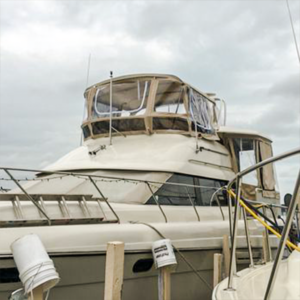
What Are Boat Mooring Covers?
A mooring cover is a heavy-duty fabric cover designed to protect a boat that remains in or near the water. It’s engineered to withstand long exposure to weather while staying securely fastened, even in wind and rain.
The goal is simple: keep water, UV rays, leaves, bird droppings, and dirt out of your boat so the interior stays clean and dry between outings.
Mooring Covers vs. Trailerable Covers
Many boat owners confuse the two, but they serve different purposes.
Trailerable covers are cut tighter and reinforced to handle highway wind while you tow. Mooring covers, on the other hand, are shaped to shed water and resist standing rain when the boat sits still.
Some covers are rated for both mooring and trailering, but a dedicated mooring cover usually gives better long-term protection when your boat stays docked. If you both tow and dock your boat, look for a dual-rated cover.
Why Mooring Covers Matter for Your Boat
Sunlight is one of the biggest threats to a boat’s interior. Over time, UV exposure fades upholstery, cracks vinyl, and weakens carpet. A good mooring cover blocks that damage before it starts.
Water pooling is another concern. Rain that collects inside an uncovered boat can lead to mildew, soggy seats, and even electrical issues. A properly fitted cover with support poles channels water off the sides instead of letting it settle.
Finally, a cover keeps your boat presentable and reduces cleaning time. That protection also helps maintain resale value, since a well-kept interior signals a well-cared-for boat.
Types of Mooring Covers by Boat Style
The right cover depends heavily on your boat’s shape and layout.
Pontoon Boat Mooring Covers
Pontoon boats have wide, flat decks and railings, so their covers are larger and often use a snap or strap system around the perimeter. Popular brands like Bennington, Avalon, Crest, and Sun Tracker often have model-specific covers that fit their exact rail dimensions.
For pontoons, a snug fit matters because loose fabric can flap in the wind and wear out quickly. Support poles are almost always needed to prevent water pooling on the flat top.
Center Console and Deck Boats
Center console boats have a raised helm station, which means the cover must accommodate that height. Many owners choose covers designed to fit over or around the console, sometimes paired with a separate T-top cover.
Deck boats, with their open bow seating, benefit from covers that stretch fully bow to stern.
Bass, Jon, and Fishing Boats
Smaller fishing boats like bass boats and jon boats usually need simpler, more affordable covers. Because these boats sit lower and have less complex layouts, universal-fit covers can work well, though a custom fit still protects better.
Key Features to Look For
Not all covers are built the same. A few features make a real difference in durability and protection.
Fabric and Water Resistance
Look for marine-grade polyester or solution-dyed fabric with a water-repellent and UV-resistant finish. Heavier fabrics generally last longer and resist tearing, but they also add weight, so balance durability with ease of handling.
Snaps vs. Non-Snap Systems
Snap-on covers attach to fittings on the boat for a tight, secure fit. They work well but require installed snaps and take more effort to put on.
Non-snap covers use adjustable straps, elastic hems, or drawstrings. These are quicker to install and popular with owners who want an easy on-and-off cover. Many pontoon owners prefer snap systems for a cleaner, tighter fit in windy conditions.
Support Poles and Fit
A support pole or bow system lifts the center of the cover so rain and snow slide off. Without one, water can pool, stretch the fabric, and eventually leak through. A cover should fit snugly without being so tight that it strains the seams.
Custom vs. Universal Mooring Covers
This is one of the most important decisions you’ll make.
Universal covers are sized to fit a range of boat lengths and beam widths. They cost less and are widely available, but the fit is looser and protection is less complete.
Custom covers are built to your exact make, model, and year. They fit precisely, look cleaner, and handle weather better. The trade-off is a higher price and a longer wait, since they’re made to order.
For boats that stay moored for long stretches, or for uniquely shaped boats, a custom cover is usually worth the investment. A trusted marine canvas shop can measure your boat and build a cover that fits exactly right.
Common Mistakes to Avoid
A few missteps can shorten the life of any cover.
First, skipping the support pole. This is the leading cause of water pooling and premature wear.
Second, choosing a cover that’s too tight or too loose. A tight cover strains seams, while a loose one flaps and traps moisture.
Third, storing the boat wet. Trapping moisture under a cover encourages mold and mildew, so always let the interior dry before covering.
Fourth, buying on price alone. A cheap cover that fails in one season costs more than a quality cover that lasts several.
Care and Maintenance Tips
Rinse your cover regularly with fresh water to remove salt, dirt, and grime. Spot-clean stains with mild soap rather than harsh chemicals, which can strip the water-resistant coating.
Reapply a fabric protectant each season to keep water beading off the surface. When you store the cover, make sure it’s fully dry and folded loosely to prevent creases and mildew.
Inspect snaps, straps, and seams periodically. Catching a loose snap or small tear early prevents bigger problems down the road.
Conclusion
Boat mooring covers are one of the smartest investments you can make to protect your boat during the off-water hours. They guard against sun, rain, and debris while keeping your interior clean and your boat ready to go.
Whether you own a pontoon, center console, or bass boat, the right cover comes down to proper fit, quality fabric, and good support against water pooling. When in doubt, a custom cover from an experienced marine canvas shop gives you the best fit and the longest life. Take the time to choose well, and your cover will pay you back season after season.
FAQs
1. What is a boat mooring cover? It’s a heavy-duty cover designed to protect a boat that stays docked, on a lift, or at anchor for long periods, shielding it from sun, rain, and debris.
2. What’s the difference between mooring and trailerable covers? Mooring covers are shaped to shed water while the boat sits still, while trailerable covers are tighter and reinforced to handle highway wind during towing.
3. Do I need a support pole with a mooring cover? Yes. A support pole lifts the cover’s center so rain and snow slide off instead of pooling, which prevents sagging and leaks.
4. Are snap-on or non-snap covers better? Snap-on covers offer a tighter, more secure fit in wind, while non-snap covers are faster to install. The best choice depends on your boat and conditions.
5. Is a custom mooring cover worth the cost? For boats that stay moored often or have unusual shapes, yes. A custom cover fits precisely, protects better, and typically lasts longer.
6. What fabric is best for a mooring cover? Marine-grade polyester or solution-dyed fabric with UV-resistant and water-repellent finishes offers the best durability and weather protection.
7. Can I leave my boat covered all season? Yes, if the interior is dry and the cover has proper support and ventilation to prevent trapped moisture and mildew.
8. Do pontoon boats need special mooring covers? Yes. Pontoon covers are larger, often snap-fitted to the rails, and usually require support poles due to the flat deck.
9. How do I keep a mooring cover from pooling water? Use a support pole or bow system to create a slope, and make sure the cover fits snugly without sagging in the middle.
10. How do I clean and maintain a mooring cover? Rinse it with fresh water, spot-clean with mild soap, reapply fabric protectant each season, and store it dry to prevent mildew.